Which pier do boat tours leave from in Aruba?
Not the cruise terminal. The snorkel and sunset fleet loads from three piers along the Palm Beach hotel strip in Noord, eight kilometres north of Oranjestad: De Palm Pier between the RIU and the Hilton, Pelican Pier between the Holiday Inn and the Playa Linda, and the Hadicurari huts at the northern end. That is why most listings here are filed under Noord. Arubus lines 10 and 10A run the strip for USD 2.60 one way; the official taxi tariff is USD 33 from the cruise port.
What is the Antilla wreck, and can you really snorkel it?
A 400-foot German freighter scuttled by her own crew off Malmok in the first year of the war, the largest wreck in the Caribbean, lying in about 60 feet of water with her masts and forward section rising to within a few feet of the surface. That shallow bow makes her a snorkel site rather than a dive-only one, and 30 to 50 feet of visibility with almost no current makes her an easy one. Every boat here that says wreck means this wreck — $69 for the short version, $119 with a BBQ aboard.
Can I snorkel Aruba for free instead of booking a boat?
For turtles, yes. Boca Catalina and Malmok are free public beaches on the same coast, reached on Arubus 10A towards Arashi, and gear rents for USD 15 to 16 a day from operators such as Vela Aruba and Aruba Active Vacations. For the Antilla, no: the wreck sits 300 to 700 metres offshore across the channel the tour boats use, the current is stronger than it looks, and no local operator endorses swimming out. That one fact is what the boat price buys.
Is there a marine park fee or a port charge to pay at the pier?
No. The reef and seagrass these boats visit sit inside Parke Marino Aruba, the island's four marine protected areas, and the park is free and open at all hours — no tag, no reserve fee, no harbour levy. The only ticketed nature site on the island is Arikok National Park at USD 22 for adults, and that is a land park sold only at its own two gates, never online and never as a tour add-on.
Which months are best for a boat trip from Aruba?
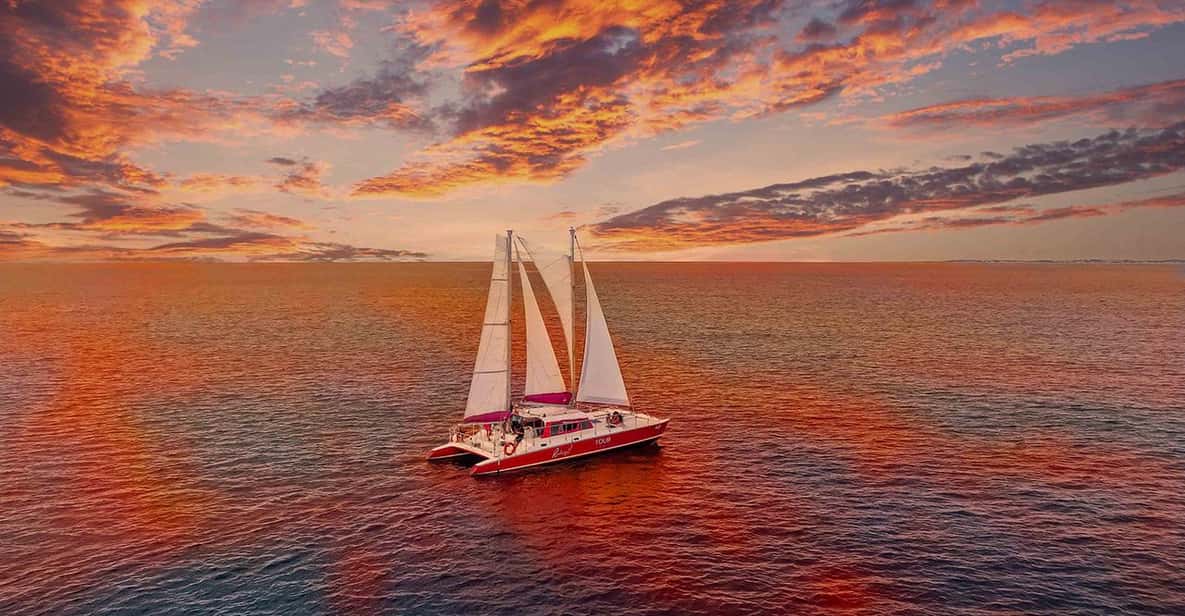
September through November. The sea is at its warmest, 28.5 °C (83 °F), and the trades are at their gentlest — the flattest decks of the year and the emptiest boats. May, June and July are the windiest stretch at 20 to 35 knots: excellent under sail, less comfortable on a crowded motor deck. There is no closed season; the water never drops below 26 °C (79 °F).
Is Aruba too windy for a boat tour?
The trades average about 18 knots daily and blow year-round, but the whole fleet works the leeward west coast, sheltered by Aruba's own north-west to south-east axis. The rule is time of day, not time of year: the wind strengthens through the afternoon, so a morning snorkel sail is flatter and clearer than the same boat at two o'clock. If seasickness is a concern, book early and pick a sailing hull over a full motor deck.
Can I take a boat from Aruba to Curaçao?
Not as a passenger service. There is no scheduled ferry between the islands; the crossing is made by air, thirty to forty minutes with Divi Divi Air or EZ Air. Both governments have taken the first formal steps towards tendering a ferry connection, but nothing runs today. Our Curaçao page covers what leaves from Willemstad.
Does Aruba get hurricanes, and will a boat be cancelled?
Aruba sits at the southern edge of the Atlantic basin, and the hurricane database — which starts in 1851 — records no direct strike on the island in its whole span. Systems do pass north: Tropical Storm Bret came within roughly 85 kilometres, close enough to keep boats alongside for a day. So the outside-the-belt claim is nearly true, and the realistic reason for a June-to-November cancellation is a rough, windy afternoon rather than a storm.
Are these boats suitable for children?
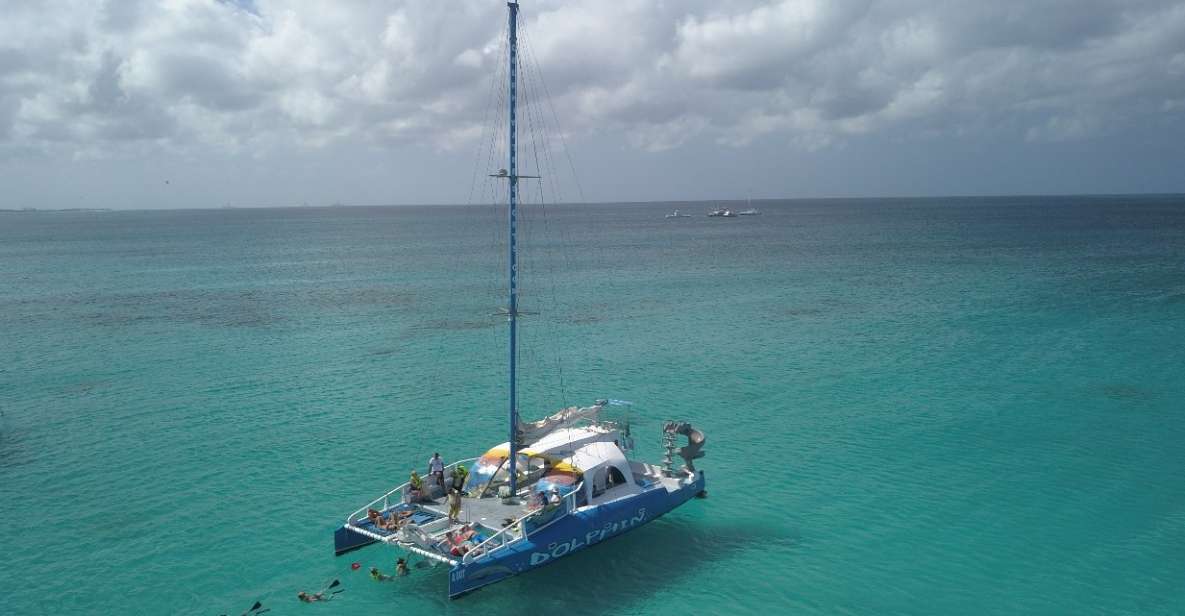
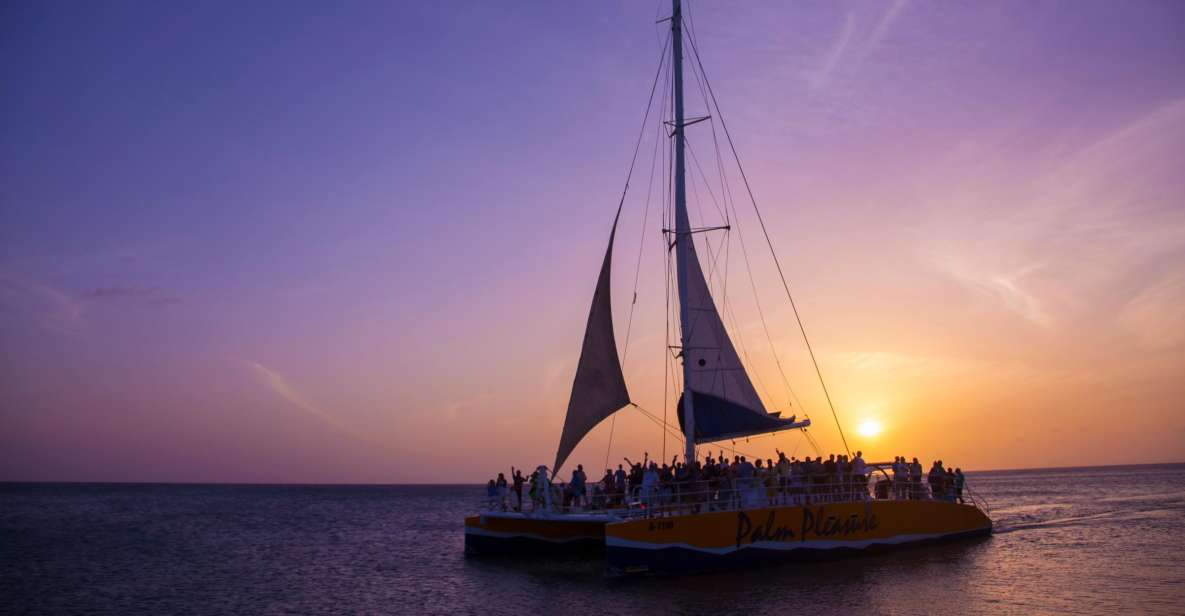
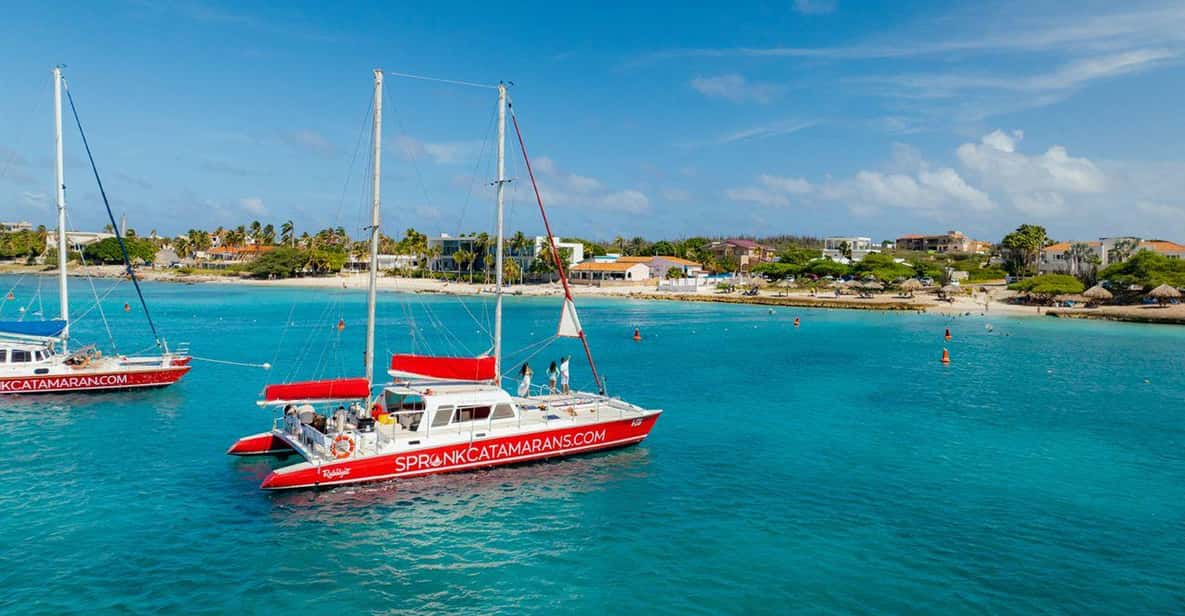
The catamarans are the easiest option: wide, stable, shaded, with nets over the bow, and the three-hour snorkel cruise at $69 is short enough for most ages, with turtles at the second stop as the payoff. The dinner cruise at $180 is an adult evening in practice. If children are not confident in open water, the free shore entry at Boca Catalina lets them stand up, which no boat stop does.