Where do boat tours actually leave from in Curaçao?
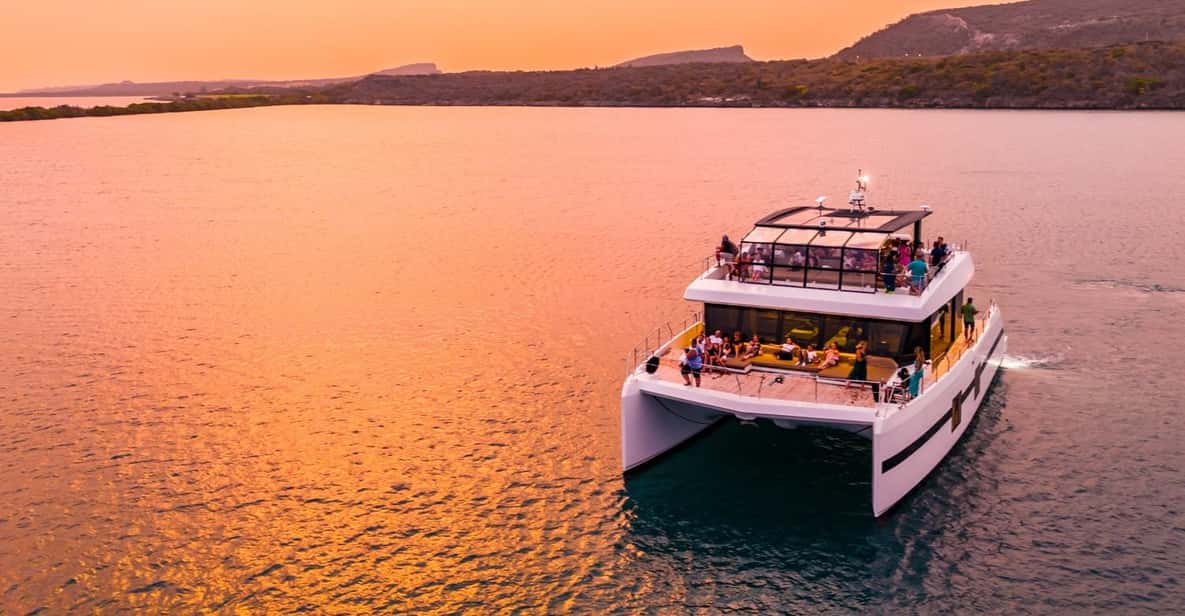
Not from the cruise pier. The Klein Curaçao boats load at Fisherman's Pier in Caracasbaai at the end of Caracasbaaiweg, at Jan Thiel beach, or inside Spanish Water at the Santa Barbara and Kima Kalki marinas — all roughly fifteen to twenty minutes east of Willemstad by taxi, with boarding from 06:30. The west-coast trips start near Playa Santa Cruz, about forty minutes northwest, and the turtle boats further out at Westpunt. Your voucher names the exact meeting point; read it the night before, because these boats sail once.
How rough is the crossing to Klein Curaçao?
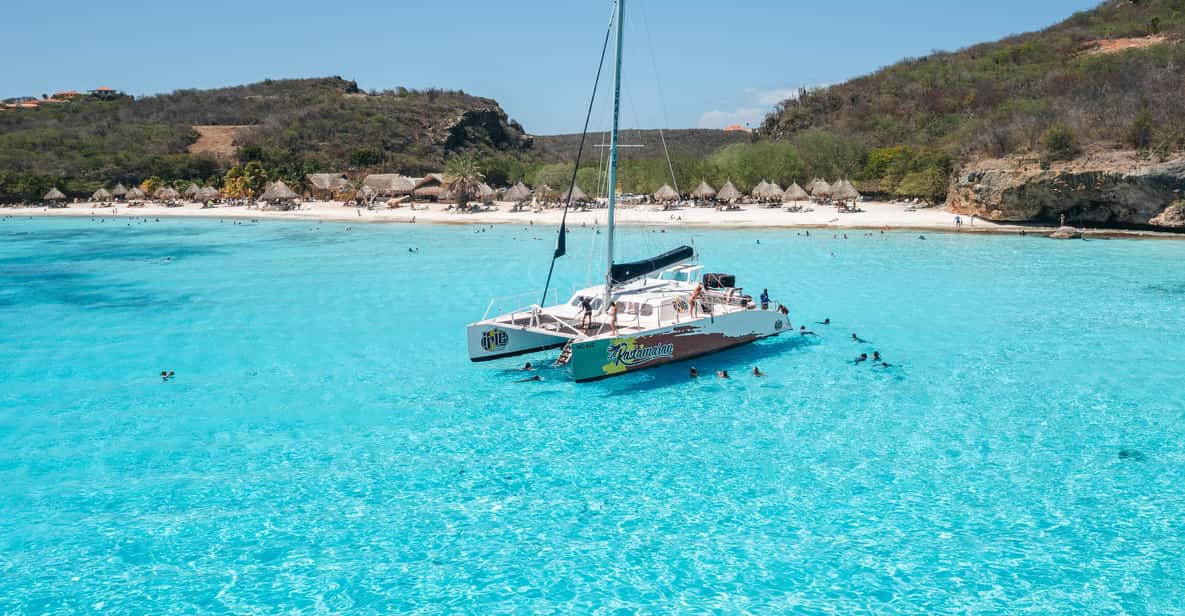
Rougher going out than coming back, every time. The island sits about 24 kilometres southeast across open water, so boats take the trade-wind swell on the beam outbound and run with it on the way home — operators quote around an hour and forty-five minutes out and often less returning. From January through April the trades are at their strongest and the crossing is genuinely bumpy; from June to October the sea flattens and it is an easy ride. If you are prone to seasickness, take a catamaran such as the $140 day trip, medicate an hour before boarding, and stay on deck.
Is Klein Curaçao worth $155 when the beach is free?
The beach is free; getting to it is not, and there is no alternative. No ferry serves Klein Curaçao, so the four crossings on this page are the entire market — which is why they sit within twenty dollars of each other rather than competing downwards. What separates them is the hull, the shade and the food: the $155 boat holds 4.8★ over 322 reviews for a nine-hour day, while $140 gets you there at 4.6★. On an island with no facilities, that difference is the day.
Is there a nature fee or marine park fee in Curaçao?
No. The Curaçao Marine Park is managed by the Carmabi foundation along the southern coast and charges nothing to swim, snorkel or dive in it. This is the opposite of neighbouring Bonaire, where the Stinapa nature fee costs forty US dollars per person per calendar year and is compulsory for any water activity. Nothing is collected at the pier in Curaçao and there is no landing charge on Klein Curaçao either — the only extras are a small beach entrance at Jan Thiel and your taxi.
Can I reach the Blue Room cave without a boat tour?
Only by paddling. Boka Santa Cruz — the Blue Room — is on the northwest coast with no road to it; the alternatives are a boat or roughly twenty minutes in a kayak from Playa Santa Cruz across open bay water. Two boats here reach it: the west-coast day at $150, which holds 4.7★ over 52 reviews and adds beaches and a barbecue, and the $99 half-day, which is the cheapest route in and sits at 2.9★ across 185 reviews. Choose accordingly.
Why is the west coast calmer than the rest of the island?
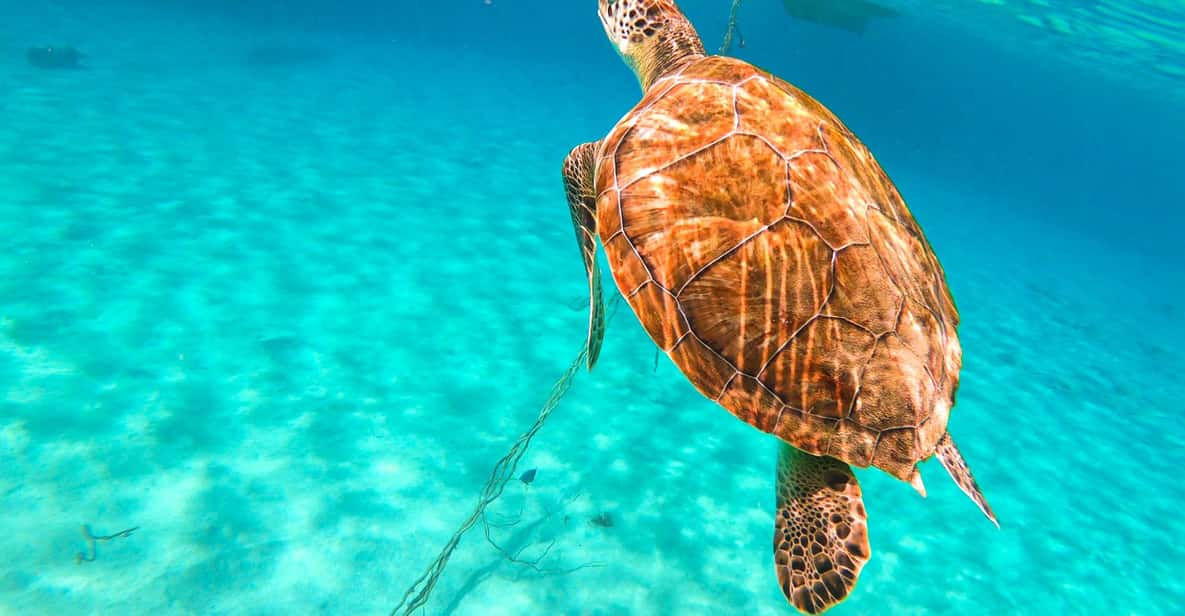
Because the island is the breakwater. Curaçao lies across the easterly trade winds with its long axis running northwest to southeast, so the north and east shores take the ocean swell against limestone cliffs while the leeward southwest coast — Willemstad up to Westpunt — stays flat and clear behind it. That is why the $75 turtle trip and the west-coast day feel nothing like the run to Klein Curaçao, and why the island's shore diving concentrates on that side.
What is actually on Klein Curaçao when you get there?
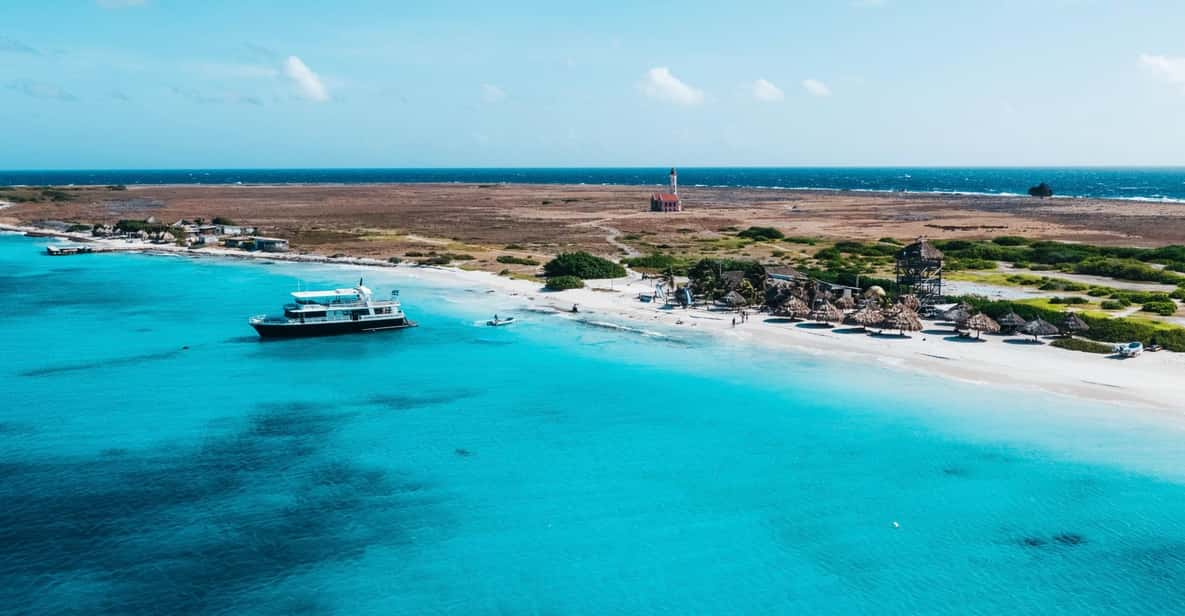
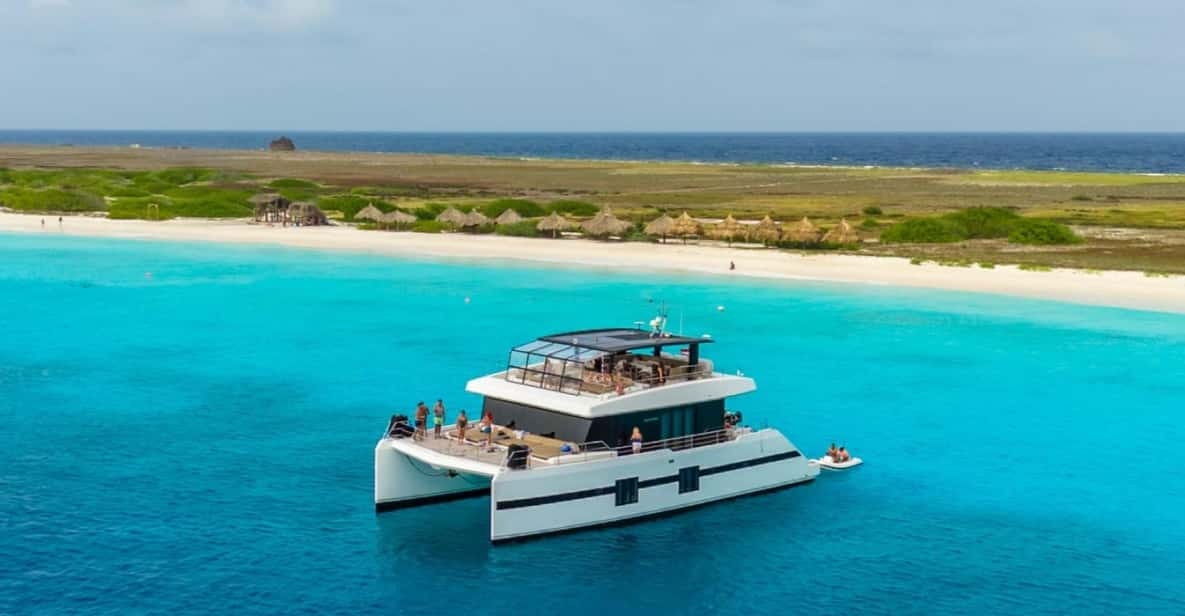
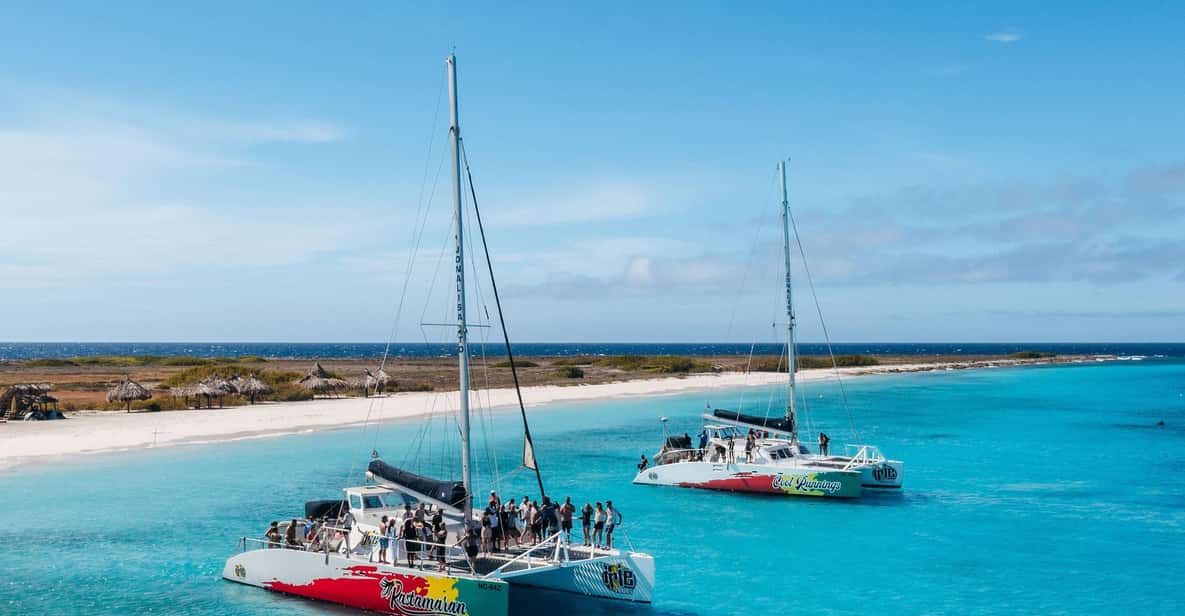
A lighthouse, a wrecked hull on the windward side, a few collapsed stone buildings and about half a square mile of flat coral sand. There is no shop, no drinking water, no toilet and no natural shade except the lighthouse itself. The palapas along the beach are not public — individual catamaran operators build and maintain their own for their own guests, so shade is something your boat either provides or does not. Bring more water than you think, and shoes if you intend to walk to the lighthouse across the thorn and rock.
Does hurricane season stop the boats?
Almost never. Curaçao sits around twelve degrees north, below the usual Atlantic hurricane track, and the historical record is short — Climates to Travel names Irene, Joan, tropical storm Bret, Ivan and Felix among the systems that have reached the island. The official danger window is June to November, sharpest from August to October, but those are also the calmest months for the Klein Curaçao crossing. The thing that genuinely disrupts a sailing here is a hard trade wind between January and April, not a storm.
When is the best month for a boat trip from Curaçao?
June through September, and September most of all. The sea peaks at 29 °C, the trades ease off, and the southeast crossing to Klein Curaçao is at its flattest — while the driest months of the year run February to July, so rain is rarely the deciding factor either way. February and March have the coolest sea at 26.5 °C and the strongest wind, which is fine for the sheltered sunset catamaran and hard work on the open-water run.